Choosing Your Oak: White, Fumed, or Cerused
One species, three treatments, three rooms with nothing in common. What each costs you, how each ages, and what to ask before you commit a whole kitchen to a sample chip.

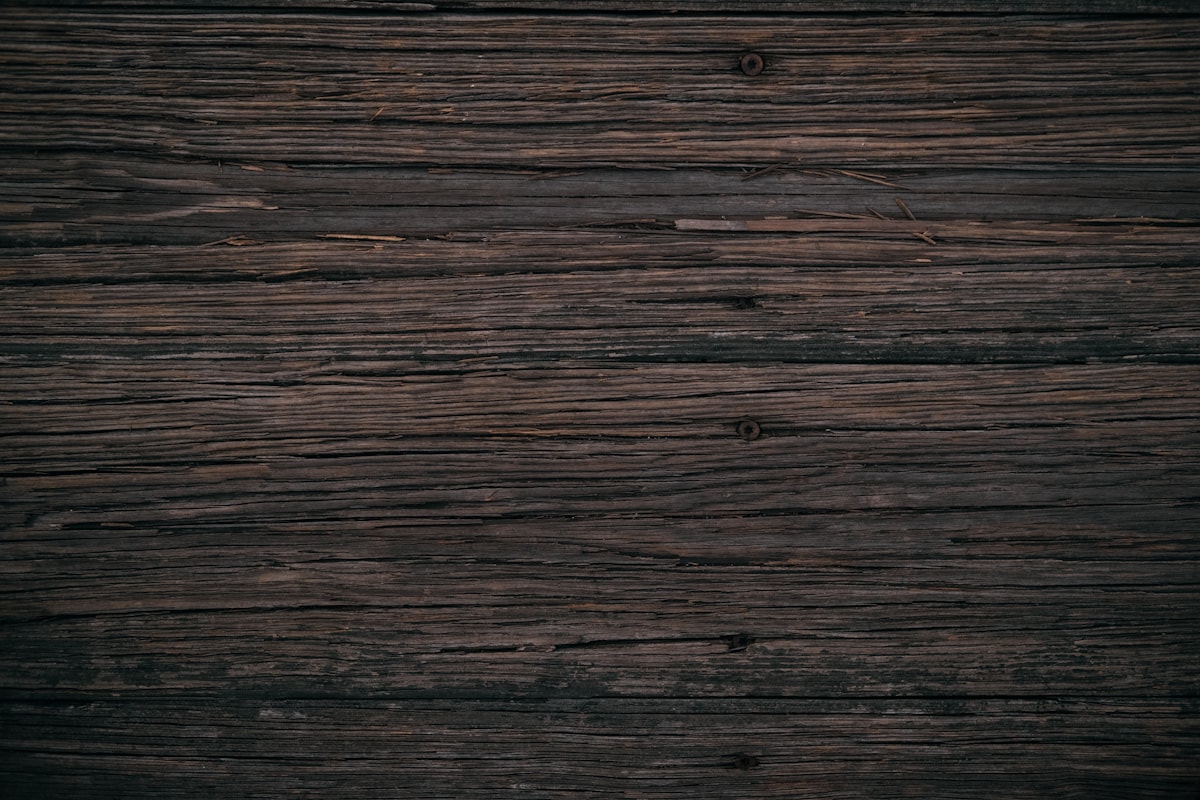
One species, three treatments, three rooms with nothing in common. What each costs you, how each ages, and what to ask before you commit a whole kitchen to a sample chip.
Start with the species
Almost everything we build in oak is white oak, and the reason sits inside the wood. White oak heartwood grows tyloses, bubble-like ingrowths that plug the vessels running the length of the board. Red oak leaves those vessels open end to end. The old shop demonstration is blowing bubbles through a submerged red oak dowel, which works and never works on white oak heartwood.
Plugged pores mean water struggles to travel through the wood, which is why white oak built barrels and boats, why it holds up in a bathroom, and why finish sits on the surface instead of sinking into the grain.
One honest correction to something you will read elsewhere. White oak is often called the more stable of the two, and in raw numbers it is not: it shrinks about 16 percent by volume from green to oven dry against red oak's 14. Its advantage is the ratio between how it moves tangentially and how it moves radially, which sits near 1.9 against red oak's 2.2. That ratio governs cupping and twisting, and cupping is what makes a door bind. So white oak moves more and distorts less.
Then the cut
The way a board comes out of the log changes its figure and its behaviour more than most people expect. All three names describe one thing: the angle the growth rings make with the face.
- Plain-sawn gives the cathedral arches most people picture when they picture oak. It also moves the most across its width, because the width is running in the direction the wood likes to move.
- Quarter-sawn puts the rings near perpendicular to the face and opens the medullary rays into the flake and fleck that Gustav Stickley built a whole movement on. It moves roughly half as much across its width as plain-sawn.
- Rift-sawn sits between the two and dodges the fleck by design, leaving straight, tight lines. This is the cut behind most contemporary work. It is also the most wasteful to produce, so it costs more.
Put a number on it. Through the humidity swing a conditioned Jacksonville house sees across a year, a two-foot-wide plain-sawn white oak panel can move a little over a quarter inch across its width. Quarter-sawn, the same panel moves about half that. That gap is why wide panels in our work sit on a stable core with a shop-sawn face rather than being glued up solid, and why we will argue with anyone who assumes solid wood everywhere is the better build.
Left clear
The cheapest of the three treatments, and the one that ages with the least drama. Clear white oak under a modern finish reads pale gold, warms over the first two years, and keeps warming.
It is also the most forgiving to repair, because there is no color to match. A scratch is a finish problem, not a wood problem.
Choose it when the room already has enough going on, or when you want the joinery and the grain to do the talking. Then spend the money you saved on better stock, because a clear finish hides nothing.
Fumed
Fuming is chemistry, not pigment. Ammonia vapor reacts with tannic acid in the wood and darkens it from within, which is why the grain stays legible instead of going muddy the way a heavy stain does.
The English found it by accident when oak stored in stables darkened from the ammonia in horse urine. Stickley brought it to American furniture in 1901 and used it on quarter-sawn white oak so the fleck would sit inside the darkened ground.
In our shop it means a sealed tent built about eight inches larger than the work on every side, open glass trays of 26 percent aqua ammonia, and roughly twenty hours with the chamber shut. Nobody is in the room. Ammonia at that strength wants a full-face respirator with ammonia cartridges, gloves and goggles, and the ordinary organic-vapor cartridge on your shelf does not stop it.
The color comes out of the wood's tannin, and tannin varies by tree, by height in the trunk and by the age of the heartwood. Two boards off two logs can land in different places, and sapwood does not darken at all, because there is no tannin in it to react.
So a fumed job gets bought from one lot, built from heartwood only, and sampled from the actual stock rather than from a chip in a binder. Then we oil the sample, because fumed oak shifts again the moment finish touches it.
The trouble buys you color that lives inside the wood, about a sixteenth to an eighth of an inch on the face and deeper on end grain. An installer can plane a whisker off a stile on site and the color is still there. No stain does that.
If ammonia is not practical, there are tannin-reactive liquid stains that use the same mechanism without the chamber, and there is the old iron-and-vinegar route, where steel wool dissolved in vinegar makes an iron acetate that turns tannin-rich wood grey-black. Both carry the same board-to-board variability, because both depend on the same variable.
Cerused
Cerusing works on texture rather than color. You open the soft early wood in the grain with a brass brush, then pack pale pigment into those pores, so the ring structure of the oak reads as a light drawing over a darker ground. It only works on ring-porous species, which is why oak and ash take it and maple does not.
The name comes from ceruse, the white lead used as a cosmetic in sixteenth-century Europe before somebody rubbed it into furniture. Modern liming wax is pigment in a clear wax base, with the lead left in history.
There are two ways to do it, and the difference decides whether the finish survives your family.
- The wax method. Sand to about 180, brush out the grain, work liming wax into the pores in small sections, let it go tacky, then buff it back. It is beautiful, it is reversible, and it belongs on furniture. You cannot put a durable topcoat over wax, so it does not belong in a kitchen.
- The pigmented filler method. Sand finer so pigment lands only in the pores and not in sanding scratches, brush the grain, lay the base color, then one seal coat judged by eye, force tinted filler into the pores, sand back everything outside them and build catalyzed topcoats on top. Slower, costlier, and the only version we will put in a working kitchen.
That single seal coat is where the job is won or lost. Too thick and the filler cannot reach into the pore, so the grain reads smeared. Too thin and pigment hazes the surface between the pores and the whole panel looks dusty.
One place red oak has a real argument: its larger pores hold more pigment, so it takes a heavier ceruse. White oak gives a tighter, more even line. That is a look decision rather than a quality one.
Over the top of all three
Two families, and the choice is about the room rather than the wood.
Hardwax oil penetrates instead of forming a film. It is warm underhand, low odor, and repairable by the person who lives there: finger-apply, wait ten minutes, wipe off, and the repair leaves no lap line. One popular two-part version goes on in a single coat, bonds in three to five minutes and reaches most of its cure in two days. It suits closets, dressing rooms, libraries and bedroom built-ins.
Catalyzed conversion varnish forms a hard film with real chemical resistance, which is what a kitchen needs and what oil cannot offer. Three coats, ten percent catalyst, sprayed in a booth. The trade is repairability: a damaged panel gets refinished rather than spot-fixed.
Over fumed oak, always sample the finish over a fumed offcut. The oil deepens the fumed color further, and judging a fumed board dry is how people end up with a kitchen two shades darker than the one they chose.
Making the call
Start with the room and work backwards. A kitchen that gets cooked in five nights a week narrows your options to a film finish, and that rules the wax ceruse out before anyone opens a sample book.
Then ask how you feel about variation. Fuming is not uniform and cannot be made uniform. Clients who love it love it for that. Tell us early if you want every door identical, because fumed oak will have a range and we would rather say so now than in week nine.
Then ask what happens in year eight. Clear oak is easiest to live with and easiest to fix. Fumed is the most forgiving of a deep scratch, because the color goes below the surface. Cerused is the hardest to repair without showing, since a proper repair means re-opening the pore and re-packing the pigment.
Then come to the shop, take three samples home, and put them in the actual room. Look at them in the morning and at four in the afternoon. More bad wood-color decisions get made under a showroom light than anywhere else.
Marcus Hale
Marcus founded Oak & Umber in 2018 with one bench and two builder clients. He still draws every job and still fits the first door on every install. You will find him at the shop on Commerce Bend most days, arguing with someone about grain direction.
More from the bench
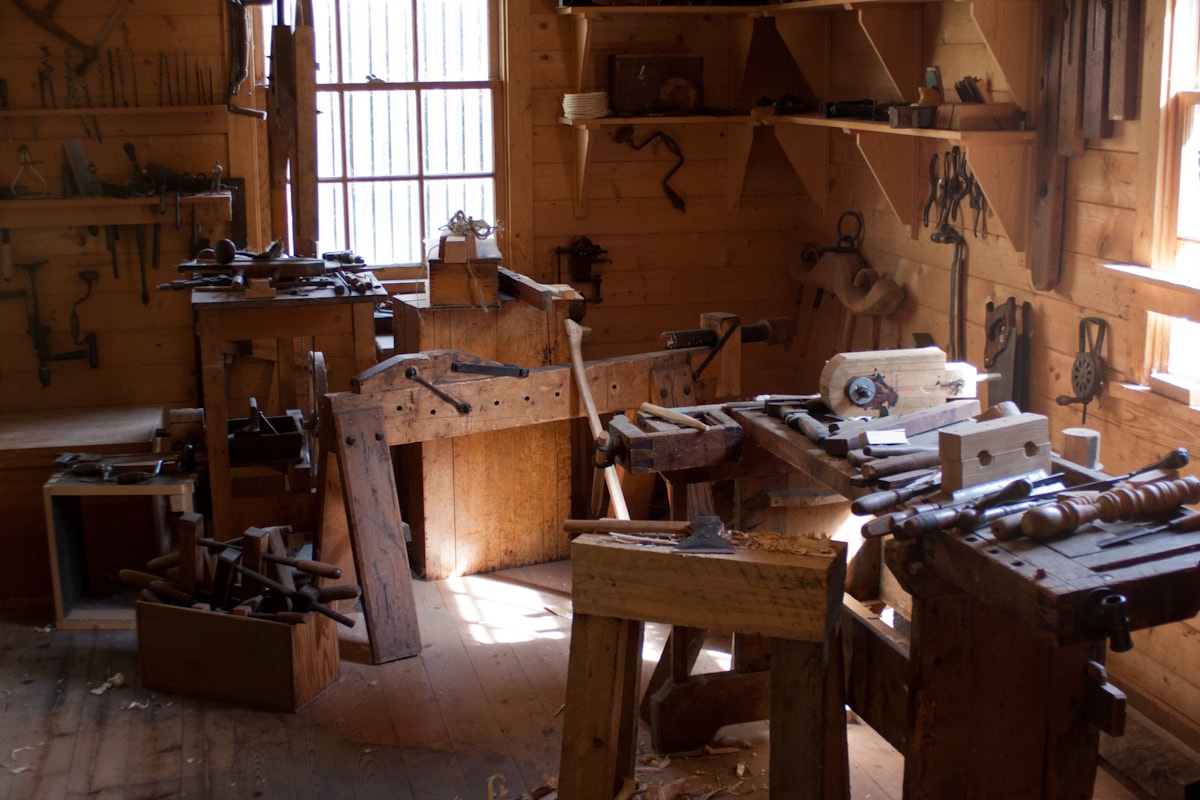
From Sketch to Install: Anatomy of a Custom Closet
Every project starts as a pencil line on graph paper. This is what happens in the eleven weeks between that line and the morning we hang the doors.
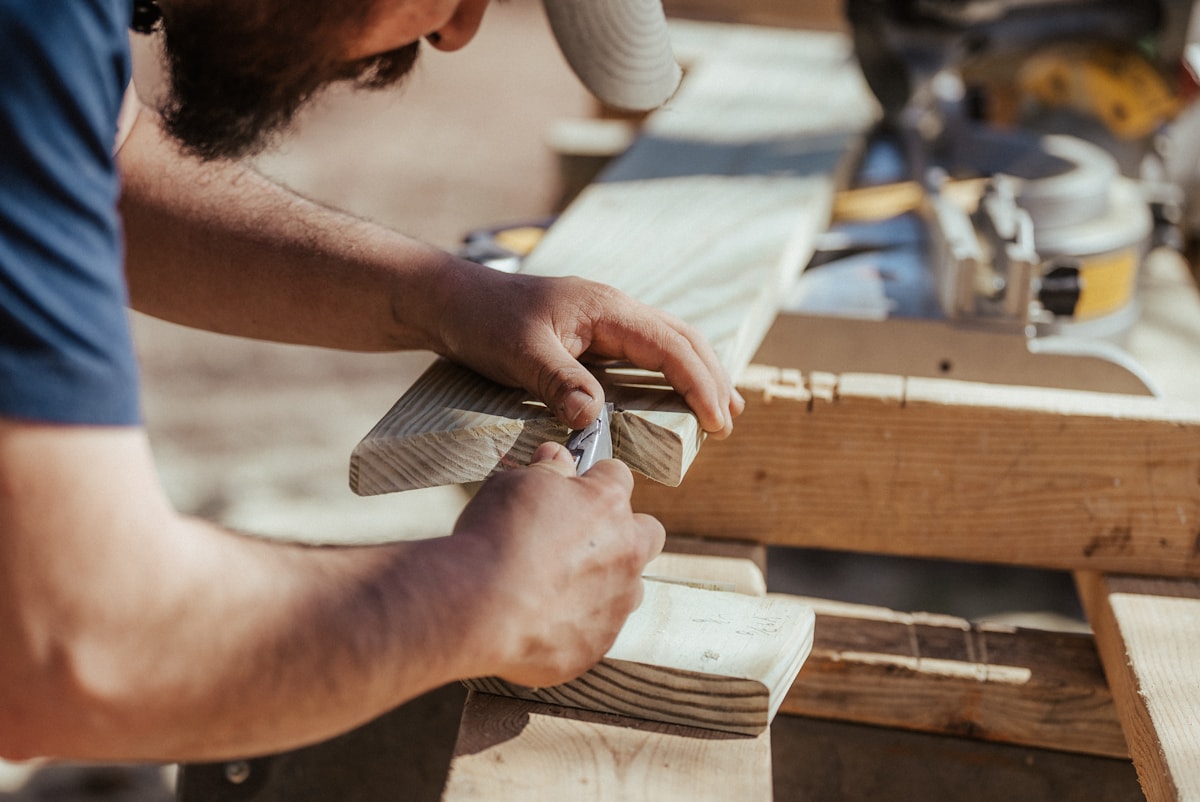
Why We Still Cut Joinery by Hand
A CNC router earns its place in a modern cabinet shop, and we would defend that to anyone. The joints you touch every day are a different argument, and the honest version of it is not the one in the brochure.