Why We Still Cut Joinery by Hand
A CNC router earns its place in a modern cabinet shop, and we would defend that to anyone. The joints you touch every day are a different argument, and the honest version of it is not the one in the brochure.

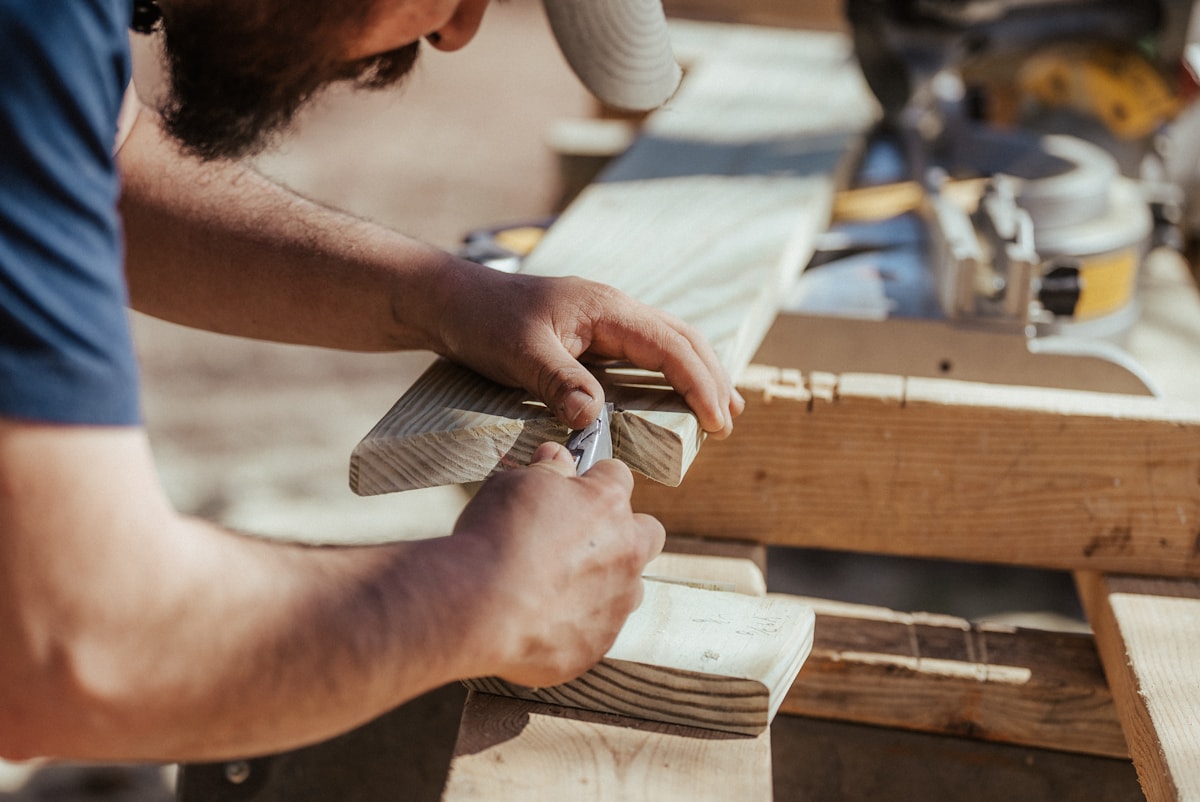
A CNC router earns its place in a modern cabinet shop, and we would defend that to anyone. The joints you touch every day are a different argument, and the honest version of it is not the one in the brochure.
The machine does some of it better
Start with the concession, because a craft argument that pretends the machine is bad is not worth reading.
A nested CNC will process a sheet of plywood in six to eight minutes including loading and unloading, and drill every shelf pin, hinge cup, slide screw and back fastener in the same pass, off the same file that priced the job. Shops report going from cabinet software to machine code for an entire kitchen in ten or fifteen minutes. One shop owner we know put it in headcount: the same volume that used to take two and a half people now takes one.
It is also good at work a hand tool has to be tricked into. Circles, curves, engraving, repeated templated parts, anything where you would otherwise build a jig first. Every hole in the 32 mm grid, landing in the same place on all forty boxes, in one setup.
Any shop that tells you a router is beneath them is either very small or selling something. We use ours daily.
The strength argument is weaker than you think
Here is where most craft writing overreaches, so we will spend a paragraph disagreeing with our own marketing.
Hand-cut dovetails do not test stronger than machine joinery with any consistency. In published bending tests, a box joint matched or beat a dovetail at the same corner, and the dovetail failed first with its pins shearing off. Loose tenons of the sort a Domino cuts land within a few percent of an integral mortise and tenon, which is inside the noise of the test. The cross-section of the joint and the quality of the material matter more than who cut it.
Testing does support two things across every study we have read. Mortise and tenon runs about twice the failure load of pocket screws, and about a quarter above dowels. The more useful finding concerns how pocket screws give way: the joint hinges and opens where you can see it long before anything breaks, so it fails as a stiffness problem while the screws are still holding.
So the real case for hand work is not brute strength. Four other arguments carry it.
The hand wins on movement
Wood moves, and in Florida it moves on a schedule. A two-foot plain-sawn white oak panel can travel a quarter inch across its width through a normal conditioned year here, and further still in a house that sits unconditioned through a summer.
A rigid, fully glued, cross-grain connection has nowhere to put that. It will find the most visible joint on the piece and split there.
The traditional answers to this are all hand-shop answers. A panel that floats unglued in its frame so it can grow and shrink behind the stiles. A breadboard end glued only at the front inch or two, with the outer pins running in elongated slots so the movement travels toward the back where nobody looks and the front edge stays flush. A drawbored peg that holds the joint closed without depending on a glue line at all.
None of that is nostalgia. It is a design that assumes the material is alive, cut by someone who can judge the fit by feel.
The line no program cuts
Your walls are not straight. The cabinet is.
Closing that gap is a scribe, and it happens on site, by hand, against a pencil line taken off the wall that morning. On a face-frame cabinet the joinery absorbs it in an extended stile the installer planes back. On a frameless box it takes a separate filler, left thick on purpose so there is material to remove.
No file produces that part. The information does not exist until the box is standing in the room.
Coming apart on purpose
A pegged mortise and tenon can be driven apart and refitted. A dovetailed drawer can be knocked down, cleaned and reglued. A cam-lock fitting in particleboard strips out, and once it strips there is nothing left for it to bite.
We will be straight about the standing of this claim: we know of no controlled study on it. It is mechanical reasoning rather than tested fact. But we have taken apart enough eighty-year-old casework and enough eight-year-old flat-pack to be comfortable saying it.
Most clients cannot tell. Ask a room full of homeowners to identify a dovetailed drawer box against a doweled one and the results will disappoint any craftsman. What people register is finish quality, how a drawer closes, and whether the gaps around the doors line up.
Cabinetmakers argue about this in public. Plenty of good shops build doweled boxes, report no failures in twenty years, and think justifying dovetails on strength is silly. They have a point.
The drawer box question
A hand-milled drawer box, from rough stock to assembly-ready, takes somewhere between one hour and an hour and twenty minutes. Cutting the dovetails with tablesaw methods brings the joint itself down to ten or fifteen minutes.
Multiply that across the twenty-two drawers in a kitchen and you are looking at most of a week of one person's time. That is a real number and it lands in the price. Shops that hand-cut every box tend to be working at the top of the market, and they say so.
Our position: the geometry of a half-blind dovetail locks the drawer front to the sides before any glue is involved, and a drawer front takes a pulling load thousands of times a year. That is the one joint in a cabinet where the mechanical argument and the loading line up. So that is where the hours go.
Where the hours go
The router cuts case parts, bores the 32 mm grid, and handles curves and repeats. It is faster than us and more consistent than us, and pretending otherwise would cost our clients money for nothing.
We cut by hand the joints that carry a pulling load, the joints you can see, the frames that need a panel to float inside them, and every scribe in every room. We keep drawer boxes in solid maple with half-blind dovetails because that joint earns its hour.
And we tell clients which is which. A shop that claims everything is hand-cut is either lying or charging for hours it should have spent somewhere more useful. The craft is knowing which half is which.
Marcus Hale
Marcus founded Oak & Umber in 2018 with one bench and two builder clients. He still draws every job and still fits the first door on every install. You will find him at the shop on Commerce Bend most days, arguing with someone about grain direction.
More from the bench
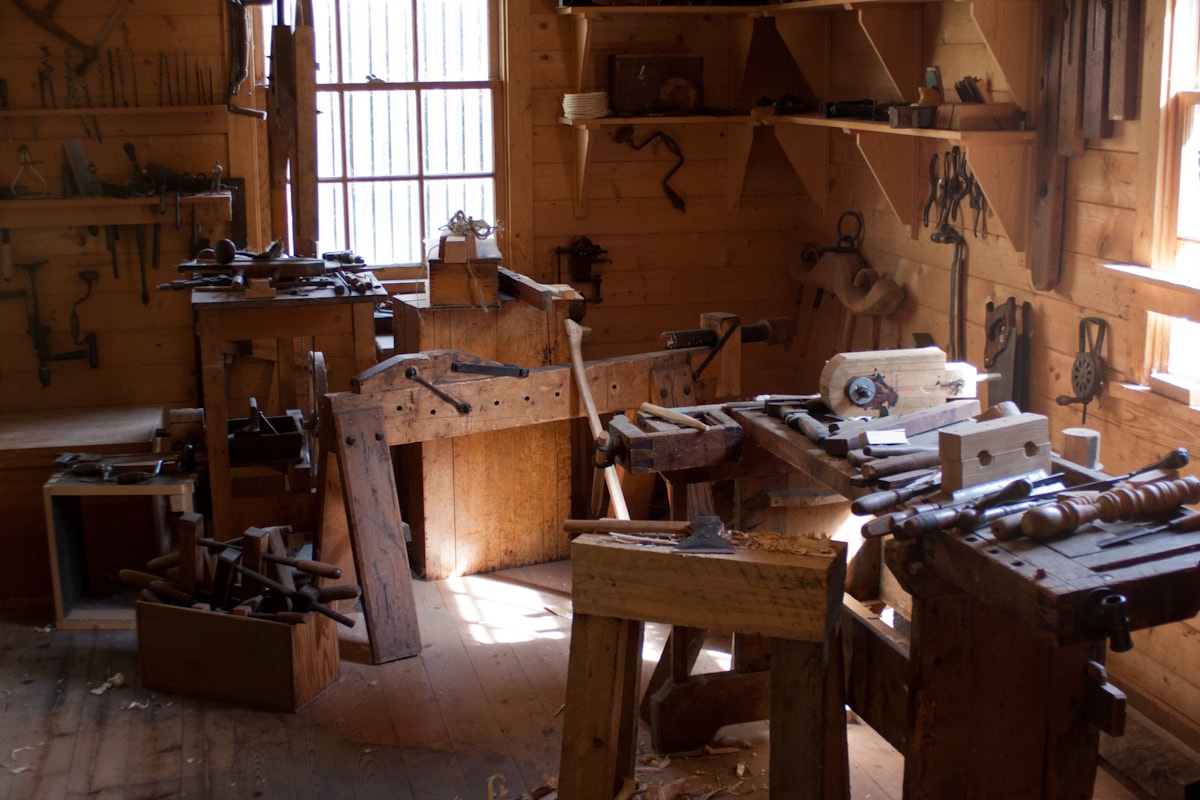
From Sketch to Install: Anatomy of a Custom Closet
Every project starts as a pencil line on graph paper. This is what happens in the eleven weeks between that line and the morning we hang the doors.

Choosing Your Oak: White, Fumed, or Cerused
One species, three treatments, three rooms with nothing in common. What each costs you, how each ages, and what to ask before you commit a whole kitchen to a sample chip.